Option 1: Print to PDF
Press Ctrl+P on Windows or Cmd+P on Mac and choose Save as PDF as the destination. Browsers apply the site’s print styles, split the page into paper-sized sheets, and often drop backgrounds, sidebars, or interactive parts. The result is searchable and lightweight, which makes it a good fit for articles, invoices, and receipts.
Option 2: Save a visual PDF
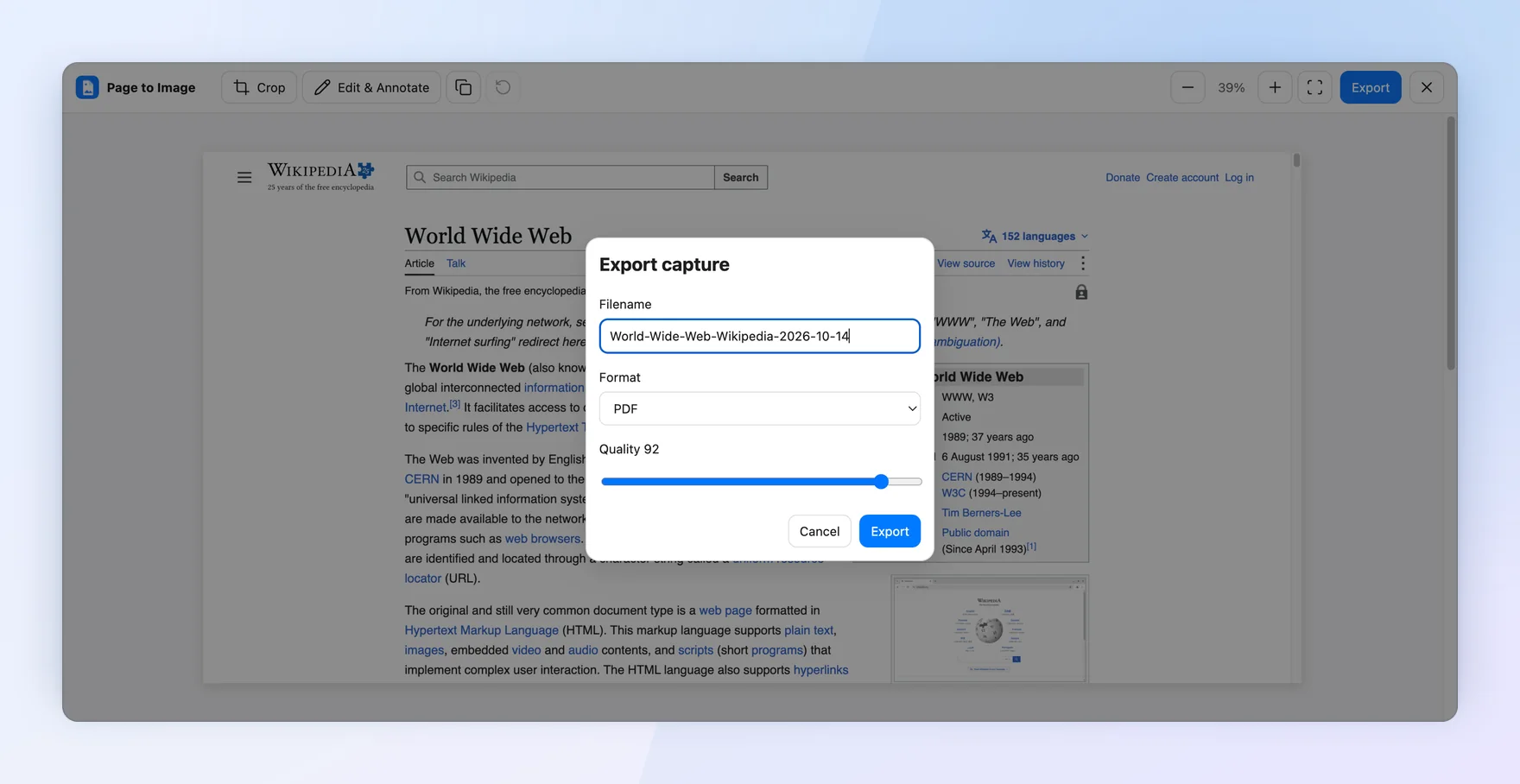
Capture the page with Page to Image, then choose PDF in the Export dialog. The PDF contains the capture as images, so layout, colors, charts, and code blocks look exactly as they did on screen. Long captures are split across PDF pages automatically, and very tall pages keep their full resolution. Text in a visual PDF is part of the image and cannot be selected or searched.
Crop and mark it up first
Before exporting, crop out navigation and footers, add arrows or short notes, and blur personal details. Edits are applied to the exported PDF, while the original capture stays unchanged until you export again.
Which PDF should you make?
Choose Print to PDF when you need searchable text or a small file. Choose a visual PDF for design reviews, evidence of how a page looked, dashboards, and pages whose print layout is broken or missing. Keep the page URL and the date with the file when you might need to check the source later.